Bertholletia excelsa
Brazil nut
Generally recognised as safeOther names: Brazil nut
Brazil nut—iconic Amazon rainforest tree.
Tall tree with whorled leaves and very hard head-sized fruits.
- Family
- Ericaceae
- Plant type
- Tree
What the safety levels mean (expand legend)
- Generally recognised as safe. Often a common herb with reasonable harvest and use; still read the specific warnings on the card.
- Information. Primarily informational — details in the text and warnings below matter most.
- Caution. Needs extra care (dose, duration, sensitive groups, interactions).
- Risky. Significant risks — verify sources, contraindications and professional guidance.
- Not for home experimentation. Not suitable to experiment with at home without knowledge and certainty.
- High risk for internal use. Particular risk with internal use (e.g. alkaloids); avoid prolonged or irresponsible dosing.
- Not specified. Level not filled in yet — rely on individual warnings and links below.
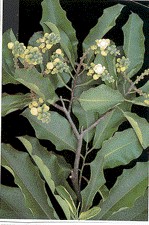
Photograph on Wikimedia Commons (Public domain).
Plant habit
Quick overview
A practical summary; details are in the sections below.
- Safety grade
- Generally recognised as safe details
- Scientific sources on the card
- Yes — sources are listed with claims Science section
- When and what to harvest
- Fruit — December–March
- Processing methods
Culinary use
All methods and recipes on the card- Topics and symptoms
Fatigue and low energy, Metabolism - gentle support
Topics section, Symptoms overview
Identification and mix-ups
Woody fruit with seeds in triangular locules.
Possible mix-ups and risks
Other rainforest trees by fruit and leaf.
Similar herbs
No related herbs are linked yet.
Topics and symptoms
More topics are in the symptoms and topics overview.
- Fatigue and low energyCulinary· Traditional / cultural framing
- Metabolism - gentle supportCulinary· Traditional / cultural framing
Geographic occurrence
Brazil
Occasional (garden, cultivation, or fringe of the range)
Harvest
- FruitDecember–March
vegetace
Region: BrazilNotes: Spherical woody fruits (ouriços) weighing up to 2 kg fall from 50 m trees in the rainy season; gatherers (castanheiros) collect them from the ground and open them with a machete, each holding 10–25 seeds in a hard shell. The tree is not grown in plantations — only a few species of wild bees pollinate it — and felling it is protected by law in Brazil.
Storage
- Refrigeration(Fruit)
Shelled nuts keep 3–6 months in the fridge in an airtight container, longer in shell; the high fat content means fast rancidity in warmth.
- Light:
- Out of light.
- Moisture:
- They mould in damp conditions (aflatoxin risk).
- Safety:
- Discard bitter or mouldy nuts.
Processing methods on this herb card
Cooking, baking, seasoning as food — general category without therapeutic claims.
Full method description (from the catalogue)
Culinary use covers herbs as ingredients in dishes, drinks, or spice mixes. This overview does not evaluate medicinal effects — only reminds you about species intent, allergies, and heat treatment where needed (e.g. some fruits or plant parts).
Combining with alcohol, sugar, or long cooking changes outcomes; verify culinary sources.
Traditional context for this method: yes·Scientific context for this method: no
Traditional / spiritual use
Kept separate from science — entries are cultural or symbolic, not medical advice.
Castanheira — the tree that must not be felled
General
Traditional useFolk useHerbal loreThe Brazil nut cannot be farmed outside the forest, because it depends on wild bees and on the agouti, the only rodent able to open its fruits, which buries the seeds. That is why the castanheira is a pillar of Amazonian extractivism — gatherers (castanheiros) live off trees they do not own, and Brazilian law forbids felling it. It has become a symbol of the 'standing forest' that is worth more alive. A record of cultural and ecological tradition.
- Form:
- strom sběračských komunit, symbol stojícího pralesa
- Claim strength:
- Tradition
- Source note:
- Amazonian extractivism (reservas extrativistas); Brazilian law (Decreto 1.282/1994); ecology of Bertholletia excelsa.
Scientific notes
Each claim lists a study type and a source (URL or DOI) where available. Dose notes from the literature are informational only.
How to read evidence strength and study type labels
Labels summarise how the catalogue entry is tagged — they are not a medical verdict on efficacy. For every row, read the summary, limitations and source link.
Evidence strength
- Evidence level not specified
- The author did not grade the record; judge from the summary, limitations and source link.
- Narrative / orientational literature
- Descriptive or expert literature without controlled group comparison — context rather than proof of effect.
- Weak evidence
- Study or conclusion with major methodological limits; treat only as a pointer for further reading.
- Preliminary findings
- First or smaller studies — interesting direction, not the final word on efficacy or safety.
- Moderate strength of evidence
- Moderate strength by study design; sample and context limits still apply.
- Stronger evidence
- Stronger design or consistency of results within the study's stated limits.
- Review article
- A review summarises multiple sources; quality depends on review method and field.
Study type
- Narrative / expert text
- Expert text or overview without a classical study design.
- In vitro study
- Cell culture or test-tube experiment — does not show an effect in the body.
- Animal study
- Animal model — transfer to humans is not automatic.
- Observational study
- Observing groups without random treatment assignment; confounding is possible.
- Clinical trial
- Human clinical trial; sample size and control group matter.
- Randomised controlled trial
- Randomised controlled trials are among the stronger designs when well conducted.
- Review study
- A review aggregates multiple papers — quality depends on selection rules.
- Systematic review
- Systematic review with explicit search and selection methodology.
- Meta-analysis
- Statistical pooling of studies; outcome depends on input data and heterogeneity.
- Regulatory assessment / monograph (EMA, WHO…)
- Regulatory body summary for a herbal product — different context from a single RCT; often about products, not home tea.
- Expert monograph (herbal preparations)
- Structured literature summary for a plant or drug — quality depends on author and edition year.
A randomised trial (59 adults, 12 weeks) found that two Brazil nuts a day raised plasma selenium and glutathione peroxidase activity as effectively as a 100 µg selenomethionine supplement.
Preliminary findingsClinical trialYear: 2008Limitations: Small sample in low-selenium New Zealand; selenium content of the nuts varies up to tenfold by origin. It says nothing about health benefits, only about selenium status.
Thomson CD, Chisholm A, McLachlan SK, Campbell JM — The American Journal of Clinical Nutrition
Images
The main photo is in the card header. More images will appear here when available.
Safety
What the warning types mean
The type on each warning helps group themes — it does not replace the separate severity badge.
- Internal use
- Risks from swallowing, extracts, duration of use or concentration for internal use.
- Interactions / medicines
- Possible effect on medicines or concurrent treatment — check sources and a professional.
- Raw plant parts
- Raw, unripe or poorly prepared plant parts can be dangerous.
- Toxins and regulation
- Toxic constituents or regulated compounds (e.g. in distillates).
- Contact with the plant
- Skin or mucosa irritation from contact with fresh plant or sap.
- Allergy
- Allergic reactions, often linked to family sensitisation.
- Harvesting and contamination
- Contamination, species mix-ups or harvesting from unsuitable places.
- Selenium has a ceilingLow severityInternal use
Two Brazil nuts a day deliver as much selenium as a 100 µg supplement (Thomson et al. 2008); a daily handful for weeks can exceed the upper safe selenium limit and lead to selenosis (hair loss, brittle nails, garlic breath). Content varies by origin — stick to a few nuts a day.