Sutherlandia frutescens
Cancer bush
CautionOther names: Lessertia frutescens, Cancer bush, Balloon pea
A South African legume shrub with inflated pods and orange flowers.
An upright shrub with silvery pinnate leaves, bright orange pea-like flowers, and distinctive inflated pods; the aerial parts are used in the traditions of the indigenous peoples of southern Africa.
- Family
- Fabaceae
- Plant type
- Shrub
What the safety levels mean (expand legend)
- Generally recognised as safe. Often a common herb with reasonable harvest and use; still read the specific warnings on the card.
- Information. Primarily informational — details in the text and warnings below matter most.
- Caution. Needs extra care (dose, duration, sensitive groups, interactions).
- Risky. Significant risks — verify sources, contraindications and professional guidance.
- Not for home experimentation. Not suitable to experiment with at home without knowledge and certainty.
- High risk for internal use. Particular risk with internal use (e.g. alkaloids); avoid prolonged or irresponsible dosing.
- Not specified. Level not filled in yet — rely on individual warnings and links below.
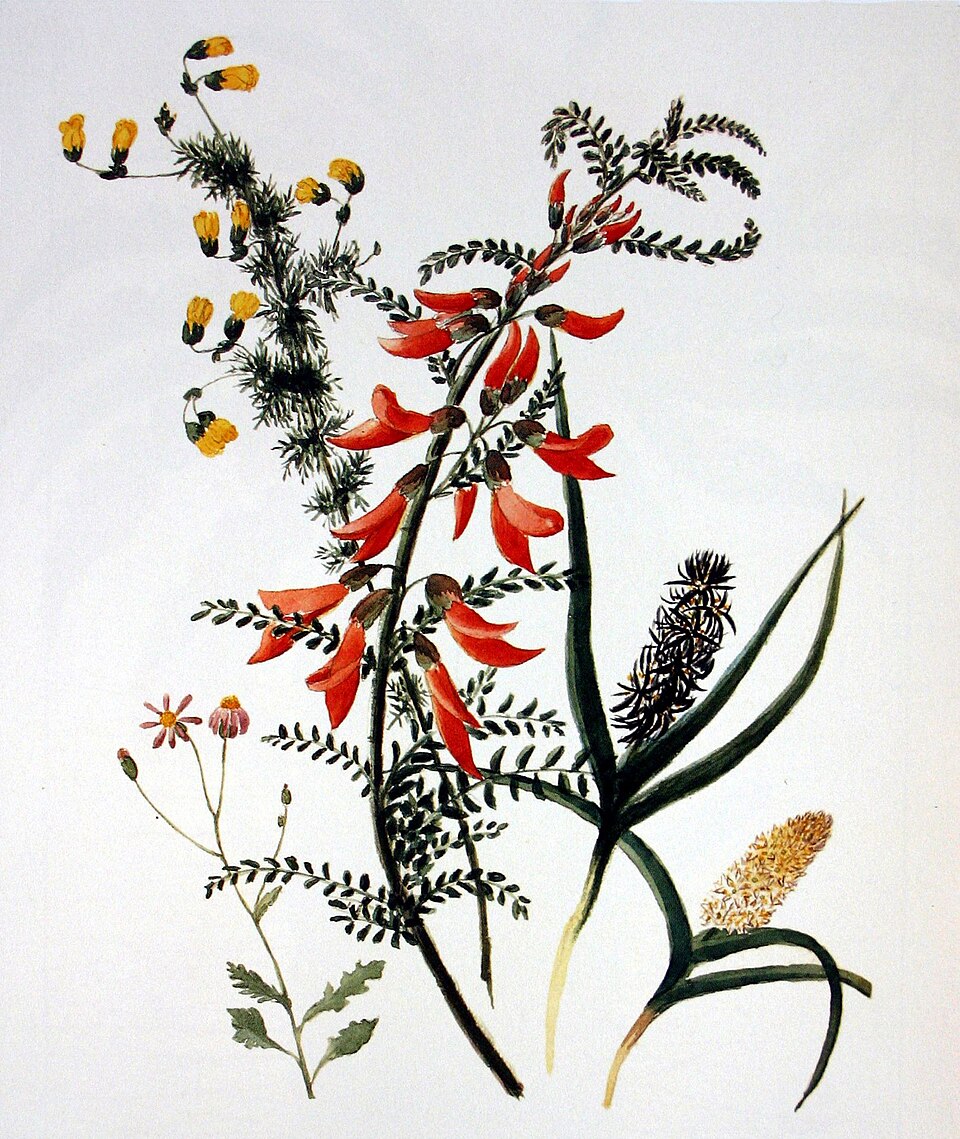
Photograph on Wikimedia Commons (Public domain).
Plant habit
Safety — read before use
For this herb it is important to check warnings, mix-ups and cautions. Start with the Safety section.
Quick overview
A practical summary; details are in the sections below.
- Safety grade
- Caution details
- Scientific sources on the card
- Yes — sources are listed with claims Science section
- When and what to harvest
- Leaf — September–December
- Processing methods
Herbal infusion (tea), Tincture, Capsules
All methods and recipes on the card- Topics and symptoms
Fatigue and low energy, Sadness and melancholy, Topic
Topics section, Symptoms overview
Identification and mix-ups
Soft-wooded shrublet in Fabaceae 0.5–1 m tall. Leaves pinnately compound, leaflets 4–10 mm, grey-green, giving the plant a silvery appearance. Flowers orange-red, to 35 mm, in short axillary racemes (spring to midsummer). The inflated, papery bladder-like pods are characteristic (hence balloon pea).
Possible mix-ups and risks
The inflated pod is shared by other species of the genus (now Lessertia), but no specific toxic lookalike is documented. The combination of inflated pod, silvery pinnate foliage and orange-red flowers is diagnostic. Note: the currently accepted name is Lessertia frutescens, with Sutherlandia frutescens as a synonym.
Similar herbs
No related herbs are linked yet.
Topics and symptoms
More topics are in the symptoms and topics overview.
- Fatigue and low energyTraditional· Traditional / cultural framing
- Sadness and melancholyTraditional· Traditional / cultural framing
- TopicTraditional· Traditional / cultural framing
Sources
Geographic occurrence
South Africa
Occasional (garden, cultivation, or fringe of the range)
Harvest
- LeafSeptember–December
spring
Region: South AfricaNotes: Aerial parts and young branchlets during the flowering season.
Storage
- Drying(Leaf)
Dried leaves with fine twigs keep a year in an airtight jar; the bitterness does not change in storage.
- Light:
- Out of light.
- Moisture:
- Protect from moisture.
- Safety:
- Label it — not to be combined with tuberculosis or HIV medication without a doctor.
Processing methods on this herb card
Infusion or brief extraction in hot water; usually without long boiling.
Full method description (from the catalogue)
Here, herbal tea is prepared as an infusion: pour freshly boiling water over dried herbs or a herbal blend and steep for at least 5 minutes. BfR gives this as a hygiene rule, not a medicinal dose. Follow the specific product instructions, including a longer steeping time when stated. This rule for herbal infusions is not a general preparation guide for true tea (Camellia sinensis). Temperature, steep time, and the herb-to-water ratio change both flavour and what dissolves into the liquid.
Compared with a decoction, heat exposure is shorter and gentler; tender leaves and flowers are often better as an infusion than with prolonged simmering. For each herb, always follow the plant card for suitable plant part, preparation, and safety notes — general rules never replace species-level judgement.
Traditional context for this method: yes·Scientific context for this method: no
A very bitter infusion (1 teaspoon per cup). A randomised trial in HIV-positive adults (Wilson et al. 2015) found no effect on viral load or CD4, but the sutherlandia group had more days of infection, including two tuberculosis cases in people on preventive isoniazid — with HIV or TB treatment only in agreement with a doctor.
Alcoholic or alcohol–water maceration extract.
Full method description (from the catalogue)
A tincture is usually a long maceration of plant material in ethanol (sometimes with water). Alcohol and time release different compound groups than hot water alone; concentration and stability depend on the herb-to-solvent ratio and procedure.
Home production involves legal and safety limits that vary by country; this site gives a general overview, not a recipe. For each herb, read the card for interactions and warnings before preparing anything yourself.
Traditional context for this method: yes·Scientific context for this method: no
Filling capsules with dried herb or powder; home and industrial variants.
Full method description (from the catalogue)
A capsule is a container; it may hold plant powder or a dry extract. Equal fill weights do not mean equal constituent levels or effects. Filling capsules with powder at home is therefore not equivalent to a standardized extract.
The word "standardized" alone does not guarantee product quality. A product sold in capsules may differ from the preparation used in a study.
This page is a guide to processing forms, not a universal dosing procedure. For each herb, distinguish the plant part, powder and extract; the list below does not by itself establish suitability for home filling.
Traditional context for this method: no·Scientific context for this method: no
Traditional / spiritual use
Kept separate from science — entries are cultural or symbolic, not medical advice.
Unwele — the bush meant to stop the tearing of hair in grief
General
Traditional useFolk useHerbal loreThe Zulu name unwele means 'hair' and is explained as the herb stopping mourners from tearing their hair out — it was given for grief, anxiety and exhaustion. The Khoi and San used it for fevers and to wash wounds; Afrikaner farmers call it kankerbos after the folk practice of giving it to cancer patients, and the English 'cancer bush' comes from that name. A record of folk tradition — the name is not proof of effect.
- Form:
- unwele: "hair", a herb against grief
- Claim strength:
- Tradition
- Source note:
- van Wyk BE, Albrecht C (2008), J Ethnopharmacol 119:620–629 (ethnobotany and names).
Scientific notes
Each claim lists a study type and a source (URL or DOI) where available. Dose notes from the literature are informational only.
How to read evidence strength and study type labels
Labels summarise how the catalogue entry is tagged — they are not a medical verdict on efficacy. For every row, read the summary, limitations and source link.
Evidence strength
- Evidence level not specified
- The author did not grade the record; judge from the summary, limitations and source link.
- Narrative / orientational literature
- Descriptive or expert literature without controlled group comparison — context rather than proof of effect.
- Weak evidence
- Study or conclusion with major methodological limits; treat only as a pointer for further reading.
- Preliminary findings
- First or smaller studies — interesting direction, not the final word on efficacy or safety.
- Moderate strength of evidence
- Moderate strength by study design; sample and context limits still apply.
- Stronger evidence
- Stronger design or consistency of results within the study's stated limits.
- Review article
- A review summarises multiple sources; quality depends on review method and field.
Study type
- Narrative / expert text
- Expert text or overview without a classical study design.
- In vitro study
- Cell culture or test-tube experiment — does not show an effect in the body.
- Animal study
- Animal model — transfer to humans is not automatic.
- Observational study
- Observing groups without random treatment assignment; confounding is possible.
- Clinical trial
- Human clinical trial; sample size and control group matter.
- Randomised controlled trial
- Randomised controlled trials are among the stronger designs when well conducted.
- Review study
- A review aggregates multiple papers — quality depends on selection rules.
- Systematic review
- Systematic review with explicit search and selection methodology.
- Meta-analysis
- Statistical pooling of studies; outcome depends on input data and heterogeneity.
- Regulatory assessment / monograph (EMA, WHO…)
- Regulatory body summary for a herbal product — different context from a single RCT; often about products, not home tea.
- Expert monograph (herbal preparations)
- Structured literature summary for a plant or drug — quality depends on author and edition year.
The review summarises the taxonomy, traditional uses and composition of sutherlandia (L-canavanine, pinitol, GABA, triterpenoid saponins called sutherlandiosides) and laboratory and animal data on anti-inflammatory and antiproliferative activity; clinical evidence in humans is lacking.
Narrative / orientational literatureReview studyYear: 2008Limitations: Mostly preclinical data; a review without meta-analysis.
van Wyk BE, Albrecht C — Journal of Ethnopharmacology
A double-blind safety trial in 107 HIV-positive adults with CD4 above 350: dried sutherlandia 1,200 mg twice daily for 24 weeks did not change viral load or CD4 count versus placebo; the herb group had a higher total burden of infection, driven by two tuberculosis cases in people on preventive isoniazid.
Preliminary findingsClinical trialYear: 2015Limitations: A safety trial, not an efficacy trial; few events; the possible interaction with isoniazid needs confirmation.
Wilson D, Goggin K, Williams K, Gerkovich MM, Gqaleni N, Syce J, Bartman P, Johnson Q, Folk WR — PLOS ONE
Images
The main photo is in the card header. More images will appear here when available.
Safety
What the warning types mean
The type on each warning helps group themes — it does not replace the separate severity badge.
- Internal use
- Risks from swallowing, extracts, duration of use or concentration for internal use.
- Interactions / medicines
- Possible effect on medicines or concurrent treatment — check sources and a professional.
- Raw plant parts
- Raw, unripe or poorly prepared plant parts can be dangerous.
- Toxins and regulation
- Toxic constituents or regulated compounds (e.g. in distillates).
- Contact with the plant
- Skin or mucosa irritation from contact with fresh plant or sap.
- Allergy
- Allergic reactions, often linked to family sensitisation.
- Harvesting and contamination
- Contamination, species mix-ups or harvesting from unsuitable places.
- Cancer bush is not a cure for cancer or HIVHigh severityInternal use
The names kankerbos and cancer bush come from folk practice of giving it to the sick, not from evidence: the review by van Wyk & Albrecht 2008 states that clinical proof of an anticancer effect in humans is lacking and the data are laboratory-based. The herb must not replace oncological or antiretroviral treatment.
- Possible interaction with isoniazid in people with HIVModerate severityInteractions / medicines
In the randomised trial by Wilson et al. 2015, HIV-positive adults taking sutherlandia had two tuberculosis cases among those on preventive isoniazid and more days of infection overall than with placebo; the authors flag a possible antagonistic interaction. Do not take the herb during tuberculosis treatment or prevention or antiretroviral therapy without a doctor's agreement.