Dysphania ambrosioides
Epazote
CautionOther names: Wormseed, Chenopodium ambrosioides
A Mexican goosefoot relative; a key herb for traditional bean dishes.
An annual to short-lived perennial with toothed leaves and a strong aroma; widely added to beans and traditional soups in Mexican cooking, used fresh or dried.
- Family
- Amaranthaceae
- Plant type
- Annual herb
What the safety levels mean (expand legend)
- Generally recognised as safe. Often a common herb with reasonable harvest and use; still read the specific warnings on the card.
- Information. Primarily informational — details in the text and warnings below matter most.
- Caution. Needs extra care (dose, duration, sensitive groups, interactions).
- Risky. Significant risks — verify sources, contraindications and professional guidance.
- Not for home experimentation. Not suitable to experiment with at home without knowledge and certainty.
- High risk for internal use. Particular risk with internal use (e.g. alkaloids); avoid prolonged or irresponsible dosing.
- Not specified. Level not filled in yet — rely on individual warnings and links below.
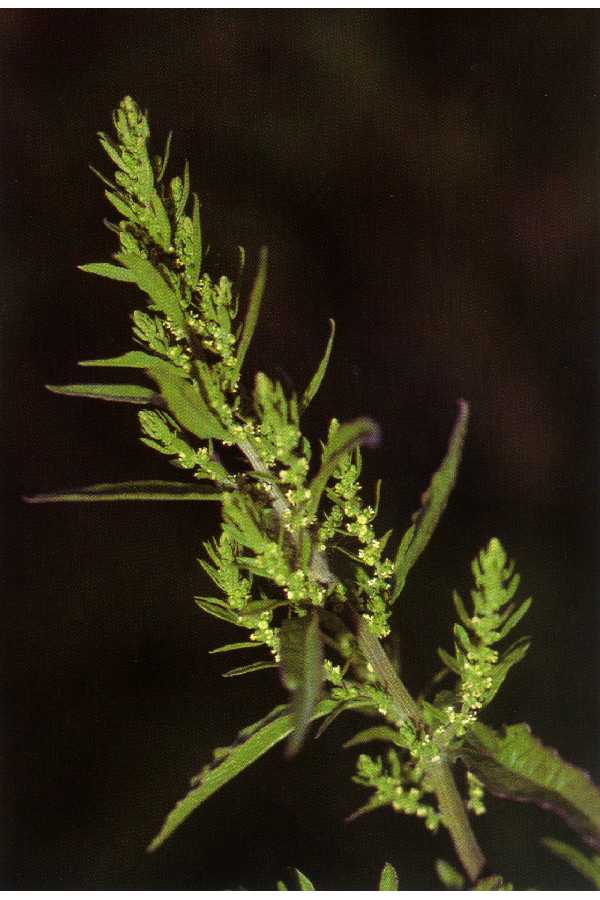
Photograph on Wikimedia Commons (Public domain).
Plant habit
Safety — read before use
For this herb it is important to check warnings, mix-ups and cautions. Start with the Safety section.
Quick overview
A practical summary; details are in the sections below.
- Safety grade
- Caution details
- Scientific sources on the card
- Yes — sources are listed with claims Science section
- When and what to harvest
- Leaf — June–September
- Processing methods
Culinary use, Herbal infusion (tea)
All methods and recipes on the card- Topics and symptoms
Bloating & gas, Digestion
Topics section, Symptoms overview
Identification and mix-ups
Annual to short-lived perennial herb in Amaranthaceae reaching about 1.2 m, irregularly branched. Leaves alternate, oblong-lanceolate, to 12 cm, with coarsely toothed to sinuate margins. Stems and leaves bear minute glands secreting a strong, musky, pungent aromatic oil (the key character). Flowers tiny, green, in branched terminal and axillary panicles; seeds minute.
Possible mix-ups and risks
Confused with lambsquarters (Chenopodium album) and oak-leaved goosefoot (Oxybasis glauca / Chenopodium glaucum), which lack the strong epazote scent and have a mealy whitish coating on the lower leaf surface; these lookalikes are edible and non-toxic. Conversely, beware epazote itself — its essential oil (ascaridole) is toxic in quantity.
Similar herbs
No related herbs are linked yet.
Topics and symptoms
More topics are in the symptoms and topics overview.
- Bloating & gasCulinary· Traditional / cultural framingTraditional· Traditional / cultural framing
- DigestionTraditional· Traditional / cultural framing
Sources
Geographic occurrence
Mexico
Common (expected wild occurrence in the region)
Harvest
- LeafJune–September
summer
Region: MexicoNotes: Aerial parts and young leaves before flowering.
Storage
- Refrigeration(Leaf)
Fresh sprigs keep 4–5 days in the fridge in a damp cloth; dried epazote loses most of its aroma, freezing is better.
- Moisture:
- It wilts and blackens.
- Safety:
- Seeds and essential oil are not used — they carry most of the ascaridole.
Processing methods on this herb card
Cooking, baking, seasoning as food — general category without therapeutic claims.
Full method description (from the catalogue)
Culinary use covers herbs as ingredients in dishes, drinks, or spice mixes. This overview does not evaluate medicinal effects — only reminds you about species intent, allergies, and heat treatment where needed (e.g. some fruits or plant parts).
Combining with alcohol, sugar, or long cooking changes outcomes; verify culinary sources.
Traditional context for this method: yes·Scientific context for this method: no
Infusion or brief extraction in hot water; usually without long boiling.
Full method description (from the catalogue)
Here, herbal tea is prepared as an infusion: pour freshly boiling water over dried herbs or a herbal blend and steep for at least 5 minutes. BfR gives this as a hygiene rule, not a medicinal dose. Follow the specific product instructions, including a longer steeping time when stated. This rule for herbal infusions is not a general preparation guide for true tea (Camellia sinensis). Temperature, steep time, and the herb-to-water ratio change both flavour and what dissolves into the liquid.
Compared with a decoction, heat exposure is shorter and gentler; tender leaves and flowers are often better as an infusion than with prolonged simmering. For each herb, always follow the plant card for suitable plant part, preparation, and safety notes — general rules never replace species-level judgement.
Traditional context for this method: yes·Scientific context for this method: no
The folk 'worm tea' belongs to the history of ascaridole poisonings; the catalogue does not recommend it.
Traditional / spiritual use
Kept separate from science — entries are cultural or symbolic, not medical advice.
Epazotl — skunk sweat in the bean pot
General
Traditional useFolk remediesFolk useHerbal loreThe Nahuatl name epazotl means 'skunk sweat', after the pungent smell; the Aztecs cooked the herb into beans and maize and used it against intestinal worms. In the United States 'wormseed oil' (Baltimore oil) was made from it in the 19th and 20th centuries as an anthelmintic drug, which disappeared from the pharmacopoeia because of poisonings. The kitchen tradition lives on, the medicinal one ended. A record of tradition and history.
- Form:
- seasoning for beans, historical deworming remedy
- Claim strength:
- Tradition
- Source note:
- Sahagún, Florentine Codex (epazotl); the US pharmacopoeia (oleum chenopodii) and its 20th-century withdrawal; Heredia Severino et al. 2025.
Scientific notes
Each claim lists a study type and a source (URL or DOI) where available. Dose notes from the literature are informational only.
How to read evidence strength and study type labels
Labels summarise how the catalogue entry is tagged — they are not a medical verdict on efficacy. For every row, read the summary, limitations and source link.
Evidence strength
- Evidence level not specified
- The author did not grade the record; judge from the summary, limitations and source link.
- Narrative / orientational literature
- Descriptive or expert literature without controlled group comparison — context rather than proof of effect.
- Weak evidence
- Study or conclusion with major methodological limits; treat only as a pointer for further reading.
- Preliminary findings
- First or smaller studies — interesting direction, not the final word on efficacy or safety.
- Moderate strength of evidence
- Moderate strength by study design; sample and context limits still apply.
- Stronger evidence
- Stronger design or consistency of results within the study's stated limits.
- Review article
- A review summarises multiple sources; quality depends on review method and field.
Study type
- Narrative / expert text
- Expert text or overview without a classical study design.
- In vitro study
- Cell culture or test-tube experiment — does not show an effect in the body.
- Animal study
- Animal model — transfer to humans is not automatic.
- Observational study
- Observing groups without random treatment assignment; confounding is possible.
- Clinical trial
- Human clinical trial; sample size and control group matter.
- Randomised controlled trial
- Randomised controlled trials are among the stronger designs when well conducted.
- Review study
- A review aggregates multiple papers — quality depends on selection rules.
- Systematic review
- Systematic review with explicit search and selection methodology.
- Meta-analysis
- Statistical pooling of studies; outcome depends on input data and heterogeneity.
- Regulatory assessment / monograph (EMA, WHO…)
- Regulatory body summary for a herbal product — different context from a single RCT; often about products, not home tea.
- Expert monograph (herbal preparations)
- Structured literature summary for a plant or drug — quality depends on author and edition year.
The review summarises the composition of epazote oil (ascaridole, p-cymene, alfa-terpinene) and laboratory studies of antiparasitic, antimicrobial and insecticidal activity; it also documents the toxicity of ascaridole and the history of poisonings from internal use of the oil.
Narrative / orientational literatureReview studyYear: 2025Limitations: Mostly in vitro and animal data; no human clinical studies. Efficacy against parasites is inseparable from the toxicity of the active compound.
Heredia Severino A, Fernández-López J, Borrás-Rocher F, Viuda-Martos M — Plants
Images
The main photo is in the card header. More images will appear here when available.
Safety
What the warning types mean
The type on each warning helps group themes — it does not replace the separate severity badge.
- Internal use
- Risks from swallowing, extracts, duration of use or concentration for internal use.
- Interactions / medicines
- Possible effect on medicines or concurrent treatment — check sources and a professional.
- Raw plant parts
- Raw, unripe or poorly prepared plant parts can be dangerous.
- Toxins and regulation
- Toxic constituents or regulated compounds (e.g. in distillates).
- Contact with the plant
- Skin or mucosa irritation from contact with fresh plant or sap.
- Allergy
- Allergic reactions, often linked to family sensitisation.
- Harvesting and contamination
- Contamination, species mix-ups or harvesting from unsuitable places.
- Essential oil and high dosesHigh severityInternal use
Epazote essential oil (ascaridole) is toxic; culinary use is limited to a small amount of leaves, not the oil or a strong decoction.
- Ascaridole — the oil, the seeds and 'worm' decoctionsHigh severityToxins and regulation
Epazote oil is up to 70 % ascaridole, a peroxide monoterpene that at higher doses damages the nervous system, liver and kidneys; the historical use of wormseed oil as an anthelmintic ended because of poisonings and deaths (Heredia Severino et al. 2025). Never the oil, seeds or concentrated decoctions; leaf cooked in food only, not in pregnancy.