Sclerocarya birrea
Marula
Generally recognised as safeOther names: Jelly plum
A southern African tree with yellow fruits rich in vitamin C.
A deciduous tree of open savannas with greyish bark and alternate leaves; the golden-yellow fruits have a juicy tangy flesh and a hard stone with oil-rich kernels.
- Family
- Anacardiaceae
- Plant type
- Deciduous tree
What the safety levels mean (expand legend)
- Generally recognised as safe. Often a common herb with reasonable harvest and use; still read the specific warnings on the card.
- Information. Primarily informational — details in the text and warnings below matter most.
- Caution. Needs extra care (dose, duration, sensitive groups, interactions).
- Risky. Significant risks — verify sources, contraindications and professional guidance.
- Not for home experimentation. Not suitable to experiment with at home without knowledge and certainty.
- High risk for internal use. Particular risk with internal use (e.g. alkaloids); avoid prolonged or irresponsible dosing.
- Not specified. Level not filled in yet — rely on individual warnings and links below.
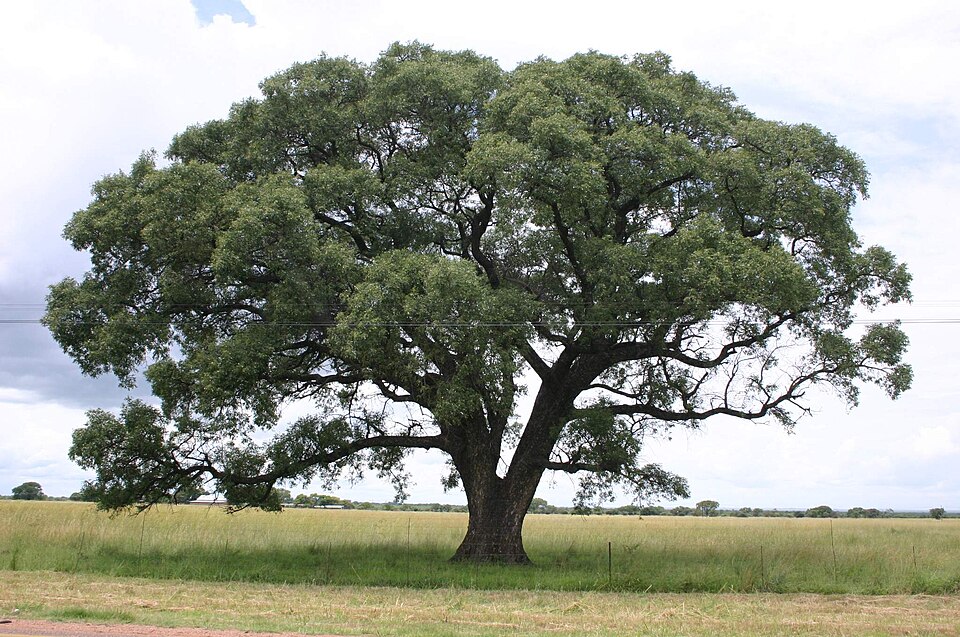
Photograph on Wikimedia Commons (Public domain).
Plant habit
Quick overview
A practical summary; details are in the sections below.
- Safety grade
- Generally recognised as safe details
- Scientific sources on the card
- Yes — sources are listed with claims Science section
- When and what to harvest
- Fruit — January–March
- Processing methods
Culinary use, Fermentation, Herbal liqueur, Herbal oil and more
All methods and recipes on the card- Topics and symptoms
Ancestors and memory, Complexion and local blemishes, Digestion…
Topics section, Symptoms overview
Identification and mix-ups
Medium to large deciduous tree in Anacardiaceae, single-stemmed, with a broad spreading crown, to 18 m. Bark grey, mottled, peeling in flat round discs that expose light-yellow tissue. Leaves alternate, imparipinnate, turning golden in autumn. The plant is dioecious; flowers small, whitish-purple to red. Fruit yellow, round to egg-shaped 2.5–5 cm, with juicy flesh around a hard stone.
Possible mix-ups and risks
No toxic lookalike is well-documented — the combination of peeling disc-like bark, pinnate leaves, dioecious habit and plum-like yellow fruit is fairly distinctive. Note: the southern African marula is subspecies caffra (POWO places it under subspecies afra).
Similar herbs
No related herbs are linked yet.
Topics and symptoms
More topics are in the symptoms and topics overview.
- Ancestors and memorySpiritual· Traditional / cultural framing
- Complexion and local blemishesTraditional· Traditional / cultural framing
- DigestionTraditional· Traditional / cultural framing
- Immunity - informational contextTraditional· Traditional / cultural framing
- Joy & celebration ritualsSpiritual· Traditional / cultural framing
Sources
Identification
Confusion risk
Geographic occurrence
South Africa
Common (expected wild occurrence in the region)
Harvest
- FruitJanuary–March
summer
Region: South AfricaNotes: Fallen ripe fruits in early spring (southern hemisphere).
Storage
- Refrigeration(Fruit)
Fresh fruit ripens after falling and lasts only a few days; the pulp is frozen or processed at once into juice, jam and beer. The kernel oil, high in oleic acid, is stable for 2 years.
- Light:
- Oil in a dark bottle.
- Moisture:
- Kernels mould in damp — dry fully and seal.
Processing methods on this herb card
Cooking, baking, seasoning as food — general category without therapeutic claims.
Full method description (from the catalogue)
Culinary use covers herbs as ingredients in dishes, drinks, or spice mixes. This overview does not evaluate medicinal effects — only reminds you about species intent, allergies, and heat treatment where needed (e.g. some fruits or plant parts).
Combining with alcohol, sugar, or long cooking changes outcomes; verify culinary sources.
Traditional context for this method: yes·Scientific context for this method: no
Microbial processing (fermentation) of plant material for drinks or foods.
Full method description (from the catalogue)
Fermentation changes sugars, flavour, and microbial composition (e.g. herbal ferments, oxymels combining honey and vinegar per tradition). Hygiene, temperature, and time are critical for a safe outcome.
Home ferments should not smell "rotten"; when in doubt, discard.
Traditional context for this method: yes·Scientific context for this method: no
Sweet alcoholic macerate with herbs; sugar and ethanol drive the outcome.
Full method description (from the catalogue)
A liqueur combines herbs, spirit, and sweetener into a strongly aromatic mixture. Home batches differ from commercial products in law and in how strength is controlled.
Follow the recipe for dosing and storage; maceration time changes colour and flavour.
Traditional context for this method: yes·Scientific context for this method: no
Macerating herbs in a vegetable oil (cold or with gentle heat).
Full method description (from the catalogue)
Herbal oil is made by steeping dried or fresh material in oil (e.g. olive, sunflower) over time, sometimes with gentle warming. The result is not steam-distilled essential oil — it is a different extract type and usage (often topical or culinary per recipe).
Temperature, light, and material moisture affect shelf life; rancid oil must be discarded.
Traditional context for this method: yes·Scientific context for this method: no
Longer simmering of plant material in water.
Full method description (from the catalogue)
A decoction is made by simmering plant material in water — often around 10–20 minutes depending on tradition and plant part. Denser parts (roots, bark, some seeds) are often prepared more reliably this way than with a short infusion.
Compared with an infusion it can extract more compounds, but also more tannins or bitterness; the flavour profile differs from a delicate tea. Combine this overview with the herb card for suitable plant part and contraindications.
Traditional context for this method: yes·Scientific context for this method: no
Traditional / spiritual use
Kept separate from science — entries are cultural or symbolic, not medical advice.
The marriage tree and beer for the ancestors
Symbolism
Spiritual useFolk useRitualSymbolismAmong the Venda, Zulu and Swazi the marula is the 'marriage tree' and a symbol of fertility; it is not felled, and family ceremonies take place beneath it. When the first fruit ripens in February and March the ukanyi festival begins (buganu among the Swazi): the first batch of marula beer is offered to the ancestors and to the chief or queen mother, and only then may the others drink. Tradition has it that elephants get drunk on the fruit — in fact they eat far too little of it. A record of ritual and symbolism.
- Form:
- wedding tree, first-fruits festival (ukanyi, buganu)
- Claim strength:
- Tradition
- Source note:
- Mariod AA, Abdelwahab SI (2012), Food Rev Int 28:375–388 (cultural introduction); SANBI PlantZAfrica — Sclerocarya birrea (cultural notes).
Scientific notes
Each claim lists a study type and a source (URL or DOI) where available. Dose notes from the literature are informational only.
How to read evidence strength and study type labels
Labels summarise how the catalogue entry is tagged — they are not a medical verdict on efficacy. For every row, read the summary, limitations and source link.
Evidence strength
- Evidence level not specified
- The author did not grade the record; judge from the summary, limitations and source link.
- Narrative / orientational literature
- Descriptive or expert literature without controlled group comparison — context rather than proof of effect.
- Weak evidence
- Study or conclusion with major methodological limits; treat only as a pointer for further reading.
- Preliminary findings
- First or smaller studies — interesting direction, not the final word on efficacy or safety.
- Moderate strength of evidence
- Moderate strength by study design; sample and context limits still apply.
- Stronger evidence
- Stronger design or consistency of results within the study's stated limits.
- Review article
- A review summarises multiple sources; quality depends on review method and field.
Study type
- Narrative / expert text
- Expert text or overview without a classical study design.
- In vitro study
- Cell culture or test-tube experiment — does not show an effect in the body.
- Animal study
- Animal model — transfer to humans is not automatic.
- Observational study
- Observing groups without random treatment assignment; confounding is possible.
- Clinical trial
- Human clinical trial; sample size and control group matter.
- Randomised controlled trial
- Randomised controlled trials are among the stronger designs when well conducted.
- Review study
- A review aggregates multiple papers — quality depends on selection rules.
- Systematic review
- Systematic review with explicit search and selection methodology.
- Meta-analysis
- Statistical pooling of studies; outcome depends on input data and heterogeneity.
- Regulatory assessment / monograph (EMA, WHO…)
- Regulatory body summary for a herbal product — different context from a single RCT; often about products, not home tea.
- Expert monograph (herbal preparations)
- Structured literature summary for a plant or drug — quality depends on author and edition year.
The review summarises traditional uses of marula bark, leaves and fruit in southern Africa and laboratory and animal studies of antidiarrhoeal, antidiabetic, anti-inflammatory and antimicrobial activity of bark and leaf extracts; clinical studies in humans are lacking.
Narrative / orientational literatureReview studyYear: 2010Limitations: Mostly preclinical data; heterogeneous extracts; a review without meta-analysis.
Ojewole JAO, Mawoza T, Chiwororo WDH, Owira PMO — Phytotherapy Research
DOI: 10.1002/ptr.3080
The review summarises the nutritional composition of the fruit (high vitamin C, sugars, organic acids), kernels (protein, minerals) and oil (about 70 % oleic acid, tocopherols, high oxidative stability) and traditional food and cosmetic uses.
Narrative / orientational literatureReview studyYear: 2012Limitations: A nutritional review without clinical data; values vary with origin and ripeness.
Mariod AA, Abdelwahab SI — Food Reviews International
Sclerocarya birrea (Marula), An African Tree of Nutritional and Medicinal Uses: A Review
Images
The main photo is in the card header. More images will appear here when available.
Safety
What the warning types mean
The type on each warning helps group themes — it does not replace the separate severity badge.
- Internal use
- Risks from swallowing, extracts, duration of use or concentration for internal use.
- Interactions / medicines
- Possible effect on medicines or concurrent treatment — check sources and a professional.
- Raw plant parts
- Raw, unripe or poorly prepared plant parts can be dangerous.
- Toxins and regulation
- Toxic constituents or regulated compounds (e.g. in distillates).
- Contact with the plant
- Skin or mucosa irritation from contact with fresh plant or sap.
- Allergy
- Allergic reactions, often linked to family sensitisation.
- Harvesting and contamination
- Contamination, species mix-ups or harvesting from unsuitable places.
- Cashew family allergyLow severityAllergy
Marula is in the same family as cashew and mango; cross-reactivity is possible in people with related allergies.