Lippia graveolens
Mexican oregano
Generally recognised as safeOther names: Mexican oregano
An aromatic Central American shrub; flavor recalls oregano with a citrus note.
A small-flowered shrub with rough leaves and a warm, citrus-tinged aroma; used in Mexican cuisine for beans and traditional sauces.
- Family
- Verbenaceae
- Plant type
- Shrub
What the safety levels mean (expand legend)
- Generally recognised as safe. Often a common herb with reasonable harvest and use; still read the specific warnings on the card.
- Information. Primarily informational — details in the text and warnings below matter most.
- Caution. Needs extra care (dose, duration, sensitive groups, interactions).
- Risky. Significant risks — verify sources, contraindications and professional guidance.
- Not for home experimentation. Not suitable to experiment with at home without knowledge and certainty.
- High risk for internal use. Particular risk with internal use (e.g. alkaloids); avoid prolonged or irresponsible dosing.
- Not specified. Level not filled in yet — rely on individual warnings and links below.
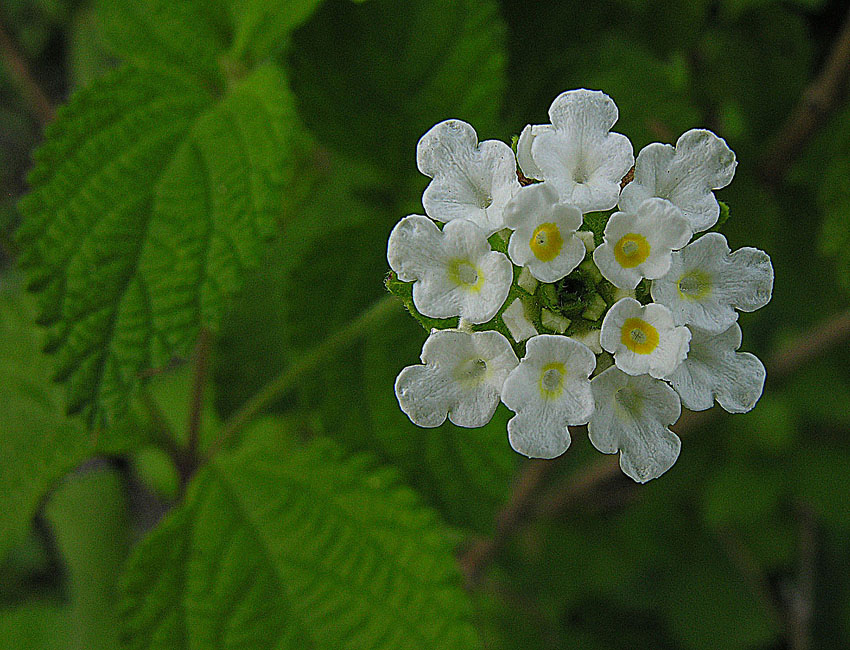
Photograph on Wikimedia Commons (CC BY 2.0).
Plant habit
Quick overview
A practical summary; details are in the sections below.
- Safety grade
- Generally recognised as safe details
- Scientific sources on the card
- No specific citations attached to claims yet
- When and what to harvest
- Leaf — June–September
- Processing methods
Culinary use, Herbal infusion (tea)
All methods and recipes on the card- Topics and symptoms
Digestion, Nausea & queasy stomach
Topics section, Symptoms overview
Identification and mix-ups
Aromatic shrub or small tree in Verbenaceae reaching 1–2.7 m with open branching. Leaves small, oblong, opposite, green, with an intense oregano aroma. Flowers small, fragrant, creamy-white to yellowish, in clusters, blooming after rains for much of the year. Native from the southern USA (Texas) through Mexico to Central America.
Possible mix-ups and risks
Confused with Poliomintha longiflora, also sold as Mexican oregano, which is however a true mint (Lamiaceae) with square stems and tubular pink-lavender flowers; it is not toxic. It is unrelated to true oregano (Origanum vulgare). Note: POWO treats Lippia graveolens as a synonym of Lippia origanoides, though regional floras and the trade often keep them distinct.
Similar herbs
- Oregano
They share a name, not kinship: Mexican oregano is a verbena-family shrub with a sharper, citrusy scent, European oregano a mint-family herb. They substitute in cooking, but not 1 : 1.
Topics and symptoms
More topics are in the symptoms and topics overview.
- DigestionCulinary· Traditional / cultural framingTraditional· Traditional / cultural framing
- Nausea & queasy stomachTraditional· Traditional / cultural framing
Sources
Geographic occurrence
Mexico
Common (expected wild occurrence in the region)
Harvest
- LeafJune–September
summer
Region: MexicoNotes: Leaves in active growth, ideally before flowering.
Storage
- Drying(Leaf)
Whole dried leaves keep 12–18 months in a closed container; crumble only into the dish.
- Light:
- Out of light.
- Moisture:
- Protect from moisture.
Processing methods on this herb card
Cooking, baking, seasoning as food — general category without therapeutic claims.
Full method description (from the catalogue)
Culinary use covers herbs as ingredients in dishes, drinks, or spice mixes. This overview does not evaluate medicinal effects — only reminds you about species intent, allergies, and heat treatment where needed (e.g. some fruits or plant parts).
Combining with alcohol, sugar, or long cooking changes outcomes; verify culinary sources.
Traditional context for this method: yes·Scientific context for this method: no
Infusion or brief extraction in hot water; usually without long boiling.
Full method description (from the catalogue)
Here, herbal tea is prepared as an infusion: pour freshly boiling water over dried herbs or a herbal blend and steep for at least 5 minutes. BfR gives this as a hygiene rule, not a medicinal dose. Follow the specific product instructions, including a longer steeping time when stated. This rule for herbal infusions is not a general preparation guide for true tea (Camellia sinensis). Temperature, steep time, and the herb-to-water ratio change both flavour and what dissolves into the liquid.
Compared with a decoction, heat exposure is shorter and gentler; tender leaves and flowers are often better as an infusion than with prolonged simmering. For each herb, always follow the plant card for suitable plant part, preparation, and safety notes — general rules never replace species-level judgement.
Traditional context for this method: yes·Scientific context for this method: no
Traditional / spiritual use
Kept separate from science — entries are cultural or symbolic, not medical advice.
The oregano that is not oregano
General
Traditional useFolk remediesFolk useWhen the Spanish reached Mexico they named the aromatic verbena-family shrub after their own oregano, and so Mexican oregano bears a borrowed name to this day. In Mexican cooking it is indispensable in pozole, birria and beans, and in household medicine a tea is made from it for coughs and 'for the stomach'. A record of kitchen and folk tradition, not a proven effect.
- Form:
- seasoning for pozole and birria, folk tea
- Claim strength:
- Tradition
- Source note:
- Mexican culinary and folk tradition; ethnobotany of northern Mexico.
Scientific notes
Each claim lists a study type and a source (URL or DOI) where available. Dose notes from the literature are informational only.
No published study records yet.
Images
The main photo is in the card header. More images will appear here when available.
Safety
What the warning types mean
The type on each warning helps group themes — it does not replace the separate severity badge.
- Internal use
- Risks from swallowing, extracts, duration of use or concentration for internal use.
- Interactions / medicines
- Possible effect on medicines or concurrent treatment — check sources and a professional.
- Raw plant parts
- Raw, unripe or poorly prepared plant parts can be dangerous.
- Toxins and regulation
- Toxic constituents or regulated compounds (e.g. in distillates).
- Contact with the plant
- Skin or mucosa irritation from contact with fresh plant or sap.
- Allergy
- Allergic reactions, often linked to family sensitisation.
- Harvesting and contamination
- Contamination, species mix-ups or harvesting from unsuitable places.
No structured safety records yet.