Ocimum tenuiflorum
Holy basil
Generally recognised as safeOther names: Holy basil, Ocimum sanctum
Holy basil (tulsi)—culturally important in South Asia; not sweet basil.
Aromatic subshrub with opposite leaves.
- Family
- Lamiaceae
- Plant type
- Subshrub
What the safety levels mean (expand legend)
- Generally recognised as safe. Often a common herb with reasonable harvest and use; still read the specific warnings on the card.
- Information. Primarily informational — details in the text and warnings below matter most.
- Caution. Needs extra care (dose, duration, sensitive groups, interactions).
- Risky. Significant risks — verify sources, contraindications and professional guidance.
- Not for home experimentation. Not suitable to experiment with at home without knowledge and certainty.
- High risk for internal use. Particular risk with internal use (e.g. alkaloids); avoid prolonged or irresponsible dosing.
- Not specified. Level not filled in yet — rely on individual warnings and links below.
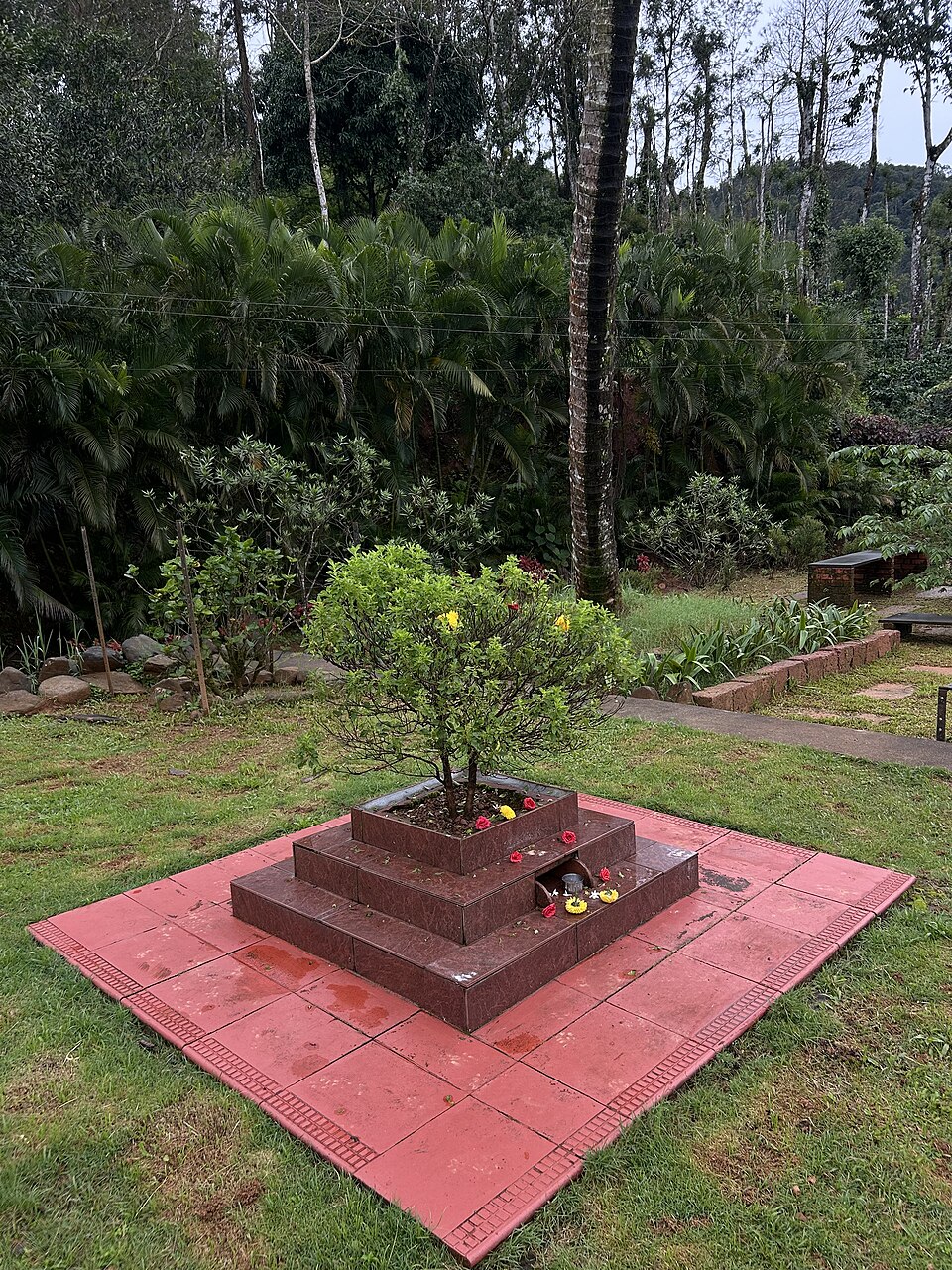
Photograph on Wikimedia Commons (CC0).
Plant habit
Quick overview
A practical summary; details are in the sections below.
- Safety grade
- Generally recognised as safe details
- Scientific sources on the card
- Yes — sources are listed with claims Science section
- When and what to harvest
- Leaf — January–December
- Processing methods
Herbal infusion (tea), Culinary use, Incense / smoke offering
All methods and recipes on the card- Topics and symptoms
Common cold — overall comfort, Topic
Topics section, Symptoms overview
Identification and mix-ups
Oval leaves; scent differs from O. basilicum.
Possible mix-ups and risks
Sweet basil by habit and scent.
Similar herbs
- Sweet basil
Sister species of the same genus. Tulsi has smaller, finely hairy leaves on purplish stems and a clove scent; sweet basil is smooth, glossy and smells of aniseed. Not interchangeable in the kitchen.
Topics and symptoms
More topics are in the symptoms and topics overview.
- Common cold — overall comfortTraditional· Traditional / cultural framing
- TopicTraditional· Traditional / cultural framing
Geographic occurrence
Myanmar
Common (expected wild occurrence in the region)
Japan
Common (expected wild occurrence in the region)
Brazil
Common (expected wild occurrence in the region)
Mexico
Common (expected wild occurrence in the region)
India
Common (expected wild occurrence in the region)
Indonesia
Common (expected wild occurrence in the region)
Thailand
Common (expected wild occurrence in the region)
Viet Nam
Common (expected wild occurrence in the region)
Harvest
- LeafJanuary–December
celoročně
Region: IndiaNotes: Leaves and tips are pinched throughout the year, ideally in the morning before flowering; regular picking keeps the bush compact. Tradition never cuts the whole plant down.
Storage
- Drying(Leaf)
Dried leaves keep 6–12 months in a closed container; the clove-like scent (eugenol) fades fast.
- Light:
- Out of light — the leaves brown.
- Moisture:
- Protect from moisture.
- Refrigeration(Leaf)
Fresh-picked leaves keep 2–3 days in the fridge in a damp cloth; better picked just before use.
- Moisture:
- They blacken quickly.
Processing methods on this herb card
Infusion or brief extraction in hot water; usually without long boiling.
Full method description (from the catalogue)
In the narrow sense, "tea" often means an infusion: you pour water just off the boil over the dried plant matter and let it steep for a few minutes. Temperature, steep time, and the herb-to-water ratio change both flavour and what dissolves into the liquid.
Compared with a decoction, heat exposure is shorter and gentler; tender leaves and flowers are often better as an infusion than with prolonged simmering. For each herb, always follow the plant card for suitable plant part, preparation, and safety notes — general rules never replace species-level judgement.
Traditional context for this method: yes·Scientific context for this method: yes
Cooking, baking, seasoning as food — general category without therapeutic claims.
Full method description (from the catalogue)
Culinary use covers herbs as ingredients in dishes, drinks, or spice mixes. This overview does not evaluate medicinal effects — only reminds you about species intent, allergies, and heat treatment where needed (e.g. some fruits or plant parts).
Combining with alcohol, sugar, or long cooking changes outcomes; verify culinary sources.
Traditional context for this method: yes·Scientific context for this method: no
Burning or heating aromatic plant material (smoke, steam).
Full method description (from the catalogue)
Incense may be dried herb, resin blends, or preparations on charcoal. The effect is sensory and cultural; smoke can irritate airways in sensitive people.
Ventilate the space; use non-flammable bases and heat-safe vessels.
Traditional context for this method: yes·Scientific context for this method: no
Traditional / spiritual use
Kept separate from science — entries are cultural or symbolic, not medical advice.
Tulsi — the goddess's plant in every courtyard
Symbolism
Spiritual useMythologyRitualSymbolismIn Hinduism tulsi is itself a deity: the embodiment of the goddess Lakshmi (Vrinda), consort of Vishnu. It grows in an ornamental pedestal in the middle of the courtyard, a lamp is lit beside it every evening, prayer beads (tulsi mala) are turned from its wood and a leaf belongs on every offering to Vishnu or Krishna. In autumn its wedding to Vishnu (tulsi vivah) is celebrated. A record of religious tradition, not a claim about effect.
- Form:
- posvátná rostlina na nádvoří, korálky džapa mala, list v obětině
- Claim strength:
- Tradition
- Source note:
- Vaishnava tradition; Padma Purana (the legend of Vrinda); living household practice in India and Nepal.
Scientific notes
Each claim lists a study type and a source (URL or DOI) where available. Dose notes from the literature are informational only.
How to read evidence strength and study type labels
Labels summarise how the catalogue entry is tagged — they are not a medical verdict on efficacy. For every row, read the summary, limitations and source link.
Evidence strength
- Evidence level not specified
- The author did not grade the record; judge from the summary, limitations and source link.
- Narrative / orientational literature
- Descriptive or expert literature without controlled group comparison — context rather than proof of effect.
- Weak evidence
- Study or conclusion with major methodological limits; treat only as a pointer for further reading.
- Preliminary findings
- First or smaller studies — interesting direction, not the final word on efficacy or safety.
- Moderate strength of evidence
- Moderate strength by study design; sample and context limits still apply.
- Stronger evidence
- Stronger design or consistency of results within the study's stated limits.
- Review article
- A review summarises multiple sources; quality depends on review method and field.
Study type
- Narrative / expert text
- Expert text or overview without a classical study design.
- In vitro study
- Cell culture or test-tube experiment — does not show an effect in the body.
- Animal study
- Animal model — transfer to humans is not automatic.
- Observational study
- Observing groups without random treatment assignment; confounding is possible.
- Clinical trial
- Human clinical trial; sample size and control group matter.
- Randomised controlled trial
- Randomised controlled trials are among the stronger designs when well conducted.
- Review study
- A review aggregates multiple papers — quality depends on selection rules.
- Systematic review
- Systematic review with explicit search and selection methodology.
- Meta-analysis
- Statistical pooling of studies; outcome depends on input data and heterogeneity.
- Regulatory assessment / monograph (EMA, WHO…)
- Regulatory body summary for a herbal product — different context from a single RCT; often about products, not home tea.
- Expert monograph (herbal preparations)
- Structured literature summary for a plant or drug — quality depends on author and edition year.
A systematic review of 24 human studies (1,111 participants) summarises that tulsi preparations reported improvements in metabolic markers, psychological stress or immune parameters in every study, and none reported serious adverse effects.
Review articleSystematic reviewYear: 2017Limitations: Most studies were small, short and at risk of bias, with varied extracts and doses. The authors explicitly call for larger, better-designed trials — this is not proof of efficacy.
Jamshidi N, Cohen MM — Evidence-Based Complementary and Alternative Medicine
The Clinical Efficacy and Safety of Tulsi in Humans: A Systematic Review of the Literature
DOI: 10.1155/2017/9217567
A review of the Ayurvedic use of tulsi as an 'adaptogen' and of laboratory data on antimicrobial, anti-inflammatory and antioxidant actions; it stresses the plant's cultural role and daily use as tea.
Narrative / orientational literatureReview studyYear: 2014Limitations: Narrative review with a markedly favourable tone; clinical data drawn from small studies.
Cohen MM — Journal of Ayurveda and Integrative Medicine
Images
The main photo is in the card header. More images will appear here when available.
Safety
What the warning types mean
The type on each warning helps group themes — it does not replace the separate severity badge.
- Internal use
- Risks from swallowing, extracts, duration of use or concentration for internal use.
- Interactions / medicines
- Possible effect on medicines or concurrent treatment — check sources and a professional.
- Raw plant parts
- Raw, unripe or poorly prepared plant parts can be dangerous.
- Toxins and regulation
- Toxic constituents or regulated compounds (e.g. in distillates).
- Contact with the plant
- Skin or mucosa irritation from contact with fresh plant or sap.
- Allergy
- Allergic reactions, often linked to family sensitisation.
- Harvesting and contamination
- Contamination, species mix-ups or harvesting from unsuitable places.
No structured safety records yet.