Silybum marianum
Milk thistle
CautionWhite leaf veins; seeds in tradition.
Large leaves with white marbling, purple heads.
- Family
- Asteraceae
- Plant type
- Biennial herb
What the safety levels mean (expand legend)
- Generally recognised as safe. Often a common herb with reasonable harvest and use; still read the specific warnings on the card.
- Information. Primarily informational — details in the text and warnings below matter most.
- Caution. Needs extra care (dose, duration, sensitive groups, interactions).
- Risky. Significant risks — verify sources, contraindications and professional guidance.
- Not for home experimentation. Not suitable to experiment with at home without knowledge and certainty.
- High risk for internal use. Particular risk with internal use (e.g. alkaloids); avoid prolonged or irresponsible dosing.
- Not specified. Level not filled in yet — rely on individual warnings and links below.
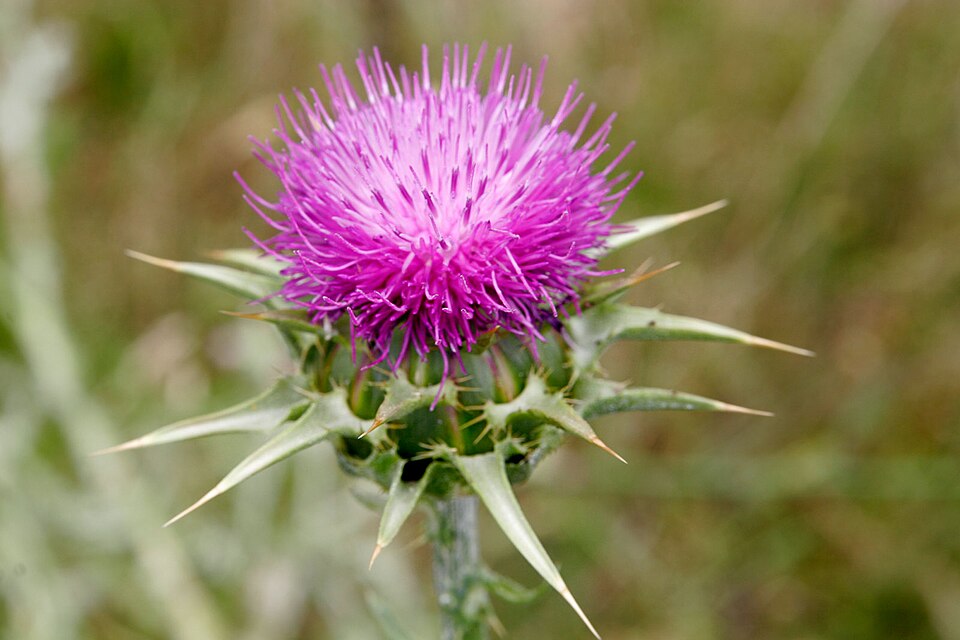
Photograph on Wikimedia Commons (GFDL 1.2).
Plant habit
Safety — read before use
For this herb it is important to check warnings, mix-ups and cautions. Start with the Safety section.
Quick overview
A practical summary; details are in the sections below.
- Safety grade
- Caution details
- Scientific sources on the card
- No specific citations attached to claims yet
- When and what to harvest
- Flower — July–September
- Processing methods
Herbal infusion (tea), Honey macerate, Syrup
All methods and recipes on the card- Topics and symptoms
Body cleansing (folk framing), Liver & bile (folk framing)
Topics section, Symptoms overview
Identification and mix-ups
Sharp spines on bracts.
Possible mix-ups and risks
Thistles and other thistles by leaf spots.
Similar herbs
No related herbs are linked yet.
Topics and symptoms
More topics are in the symptoms and topics overview.
- Body cleansing (folk framing)Traditional· Traditional / cultural framing
- Liver & bile (folk framing)Traditional· Traditional / cultural framing
Geographic occurrence
Czechia
Common (expected wild occurrence in the region)
Widespread or commonly cultivated in the Czech Republic, depending on habitat or garden context.
Austria
Common (expected wild occurrence in the region)
Germany
Common (expected wild occurrence in the region)
Hungary
Common (expected wild occurrence in the region)
Poland
Common (expected wild occurrence in the region)
Slovakia
Common (expected wild occurrence in the region)
Harvest
- FlowerJuly–September
summer
Region: CzechiaNotes: Flower heads before seeds fully ripen; watch out for thorns.
Storage
- Drying(Leaf)
Keep dried plant material in a sealed container.
- Light:
- Out of direct UV.
- Moisture:
- Low relative humidity.
Processing methods on this herb card
Infusion or brief extraction in hot water; usually without long boiling.
Full method description (from the catalogue)
Here, herbal tea is prepared as an infusion: pour freshly boiling water over dried herbs or a herbal blend and steep for at least 5 minutes. BfR gives this as a hygiene rule, not a medicinal dose. Follow the specific product instructions, including a longer steeping time when stated. This rule for herbal infusions is not a general preparation guide for true tea (Camellia sinensis). Temperature, steep time, and the herb-to-water ratio change both flavour and what dissolves into the liquid.
Compared with a decoction, heat exposure is shorter and gentler; tender leaves and flowers are often better as an infusion than with prolonged simmering. For each herb, always follow the plant card for suitable plant part, preparation, and safety notes — general rules never replace species-level judgement.
Traditional context for this method: yes·Scientific context for this method: no
Macerating plant material in honey (a honey conserve).
Full method description (from the catalogue)
Honey as a maceration medium creates a viscous mixture with its own biochemistry: water activity, acidity, and enzymes influence shelf life and flavour. Traditionally it is used with delicate flowers or herbs when you want aroma bound into honey.
Infant botulism guidance for honey and honey safety in general sit outside a single herb page; maceration time, ratios, and storage must follow a vetted recipe and source, not this general overview alone.
Traditional context for this method: yes·Scientific context for this method: no
Decoction or infusion with sweetener and reduction; shelf life depends on sugar and storage.
Full method description (from the catalogue)
Syrups combine a herbal base with sugar or honey and often a short boil to concentrate and improve hygiene. Preservation depends strongly on water content, sugar level, and bottling practice.
Home syrups may fall under food rules; store in the fridge after opening per recipe.
Traditional context for this method: yes·Scientific context for this method: no
Traditional / spiritual use
Kept separate from science — entries are cultural or symbolic, not medical advice.
Related guides in the library
Traditional folk context
General
The herb appears in older folk customs referenced on Czech cards. This note is cultural memory and seasonal storytelling — not a dosing guide, clinical indication, or substitute for the safety section.
- Form:
- various
- Claim strength:
- Tradition
- Source note:
- Cultural framing only.
Scientific notes
Each claim lists a study type and a source (URL or DOI) where available. Dose notes from the literature are informational only.
No published study records yet.
Images
The main photo is in the card header. More images will appear here when available.
Safety
What the warning types mean
The type on each warning helps group themes — it does not replace the separate severity badge.
- Internal use
- Risks from swallowing, extracts, duration of use or concentration for internal use.
- Interactions / medicines
- Possible effect on medicines or concurrent treatment — check sources and a professional.
- Raw plant parts
- Raw, unripe or poorly prepared plant parts can be dangerous.
- Toxins and regulation
- Toxic constituents or regulated compounds (e.g. in distillates).
- Contact with the plant
- Skin or mucosa irritation from contact with fresh plant or sap.
- Allergy
- Allergic reactions, often linked to family sensitisation.
- Harvesting and contamination
- Contamination, species mix-ups or harvesting from unsuitable places.
- Asteraceae allergyModerate severityAllergy
Milk thistle belongs to a plant family with common pollen allergens; use caution if you are sensitized.